
Justice and hope in dark times
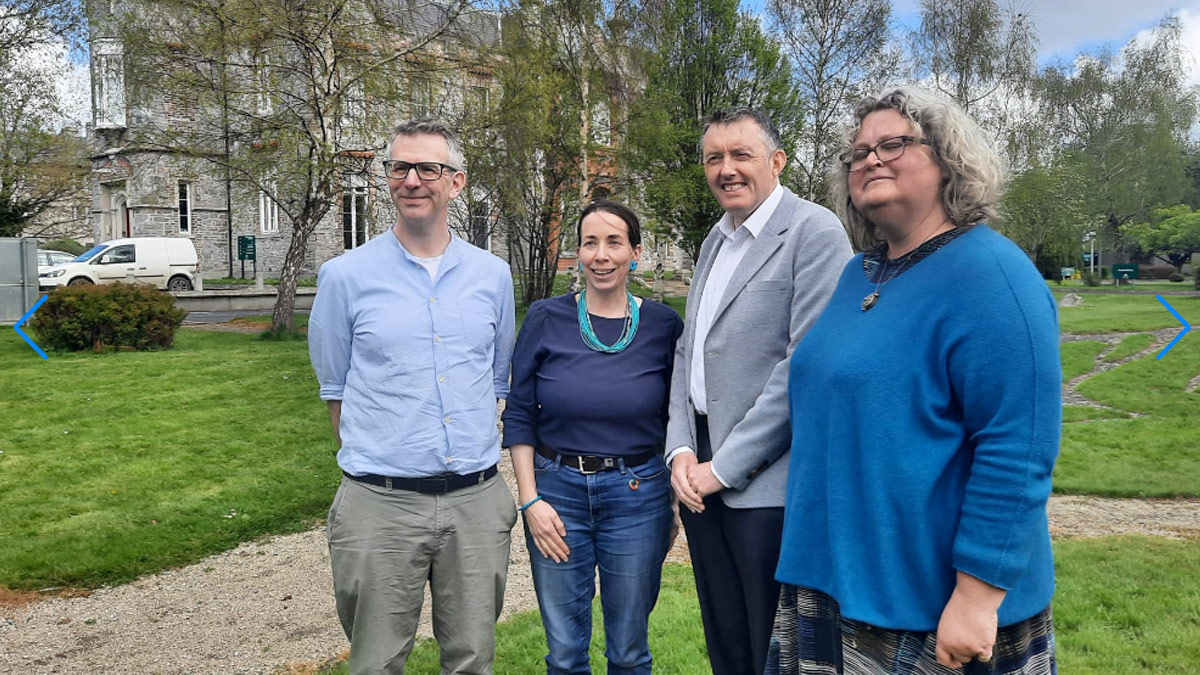
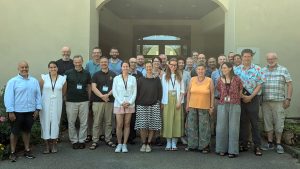
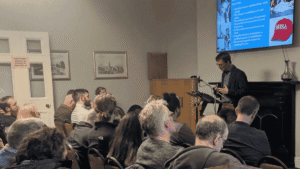
Dr Kevin Hargaden of the Jesuit Centre for Faith and Justice was one of the contributors at the annual AMRI » Justice Conference, held at the Parish Hall in Kimmage Manor, Dublin, on Saturday, 18 April 2026. The event was attended by some 70 participants from across civil society and faith-based organisations across Ireland, including delegates from many Religious Orders, Missionaries, and representatives of various organisations from a variety of countries.
The conference, entitled ‘Advancing Justice, Peace and Care for Our Common Home’, allowed participants to explore opportunities for collaborative, faith-based responses towards a just and sustainable future for all, amid a fractured global reality.
Fr. Joe McGee, MSC, and President of AMRI, welcomed the delegates to the conference. He said such days were about reclaiming the voice of faith in public society and “ensuring the wider society knows about our faith response to justice.”
Drawing on Dilexi Te » (‘I have loved you’), the Apostolic Exhortation by Pope Leo XIV, Kevin Hargaden focused on the role of civil society and faith-based organisations in working together to respond to what Pope Francis called ‘the cry of the earth’ and ‘the cry of the poor’.
CEO of Trócaire Seán Farrell, gave a keynote speech, in which he noted that the Catholic Church is the second largest deliverer of humanitarian aid in the world today. This radical truth needs to be heard by societies around the world, he told those present.
He began his address by “honouring the history and legacy of the Irish Missionary Movement.” He noted that Kimmage Manor is such a “special place of encounter for everyone here today who has been shaped by the Irish Missionary Church.” In an overview of the dramatic recent changes to Overseas Development Aid, he stressed the undermining of funding for poverty and hunger by governments, as well as the impact of war on the poorest people on the planet. ‘What do we do together about global poverty and climate change in a world that is doing less to respond?” he asked. He praised the Irish Government for its commitment to overseas aid, describing it as “an outlier now in the First World.”
Sean Farrell also reminded those in attendance that, despite the realities on the ground, “hope is possible” and, in difficult and dark times, the light must shine brightest. “Now is the time not to step back but to step forward… peace and justice work is particularly needed today”.
Róisín Markham from the Irish Doughnut Economics Network was a panel guest who outlined the ways in which the concept of ‘Doughnut Economics’» is essential in reimaging a sustainable future – ‘We are at a moment in time where we need a “radical transformation …that is moral, social and cultural”. In a nutshell, Doughnut Economics is a visual framework for sustainable development – shaped like a doughnut or lifebelt – combining the concept of planetary boundaries with the complementary concept of social boundaries.
She also invited participants to ‘Step into the Doughnut,’ an interactive experience exploring the interconnectedness of ecology and humanity, reflecting on pathways toward a just and sustainable future.
Ambassador David Donoghue, former Permanent Representative of Ireland to the UN in New York and co-facilitator of the negotiations on the UN 2030 Agenda, explored human flourishing at the centre of sustainable development and reflected on ‘what next for the UN Agenda 2030.’
The conference concluded with commitments by those present to collaborate on key issues of social justice, global peace and care for our common home.
The event was organised by Dr Toni Pyke Justice, Peace and Ecology Coordinator at the Association of Leaders of Missionaries and Religious of Ireland (AMRI), which represents over 150 Religious Institutes, Societies of Apostolic Life and Missionary Organisations, including lay missionaries. AMRI promotes religious, apostolic and missionary life as part of the mission of the Church.