
Faithful Justice: Reimagining the Jesuit Mission
DERMOT ROANTREE :: D’ou parlez-vous? Where do you speak from? Or, more idiomatically, where are you coming from? Richard Kearney often recalls that Paul Ricoeur would open his seminars in 1970s Paris with precisely this question. (1) It goes to the core of hermeneutics. What in your history – your formation, your conditions of life, your experience – has shaped your horizon of understanding? Every view is a view from somewhere.
We are historical beings through and through. The past has shaped our present world, and we remain indebted to it; yet the present world raises new questions that confront the assumptions and meanings inherited from the past. This is Hans-Georg Gadamer’s ‘fusion of horizons’: (2) the historically formed horizon we inhabit is enlarged and transformed in encounter with the horizon embodied in the past, with each of them, past and present, questioning and challenging the other. For Gadamer, then, we cannot escape history, but this is not a defect; it is what allows truth to emerge.
In the first decades after the Second Vatican Council, which concluded in 1965, many religious orders strove to remain faithful to their original charism while at the same time adapting it to the needs of a profoundly changed cultural environment. Not just changed, but continuously changing – what Zygmunt Bauman termed ‘liquid modernity’: (3) the waning of stability and of clear frames of reference for social order and human behaviour. The Western world experienced a deep transformation of assumptions about authority, identity, and cultural continuity, such that established institutions – churches, families, governments – were expected to justify themselves rather than be simply obeyed. At the same time there was a powerful shift in moral perspective: movements for human and civil rights, the recognition of structural injustice and inequality, and the emergence of a new language of rights and conscience all helped to reframe public life in terms of dignity and freedom. And all this took place within a technocratic global order that contributed to prosperity but laboured under the shadow of a threatened nuclear apocalypse. If the aspirations of the Council were to be realised, these were the ‘signs of the times’ that would have to be addressed. But how to achieve this while keeping faith with one’s historical identity?
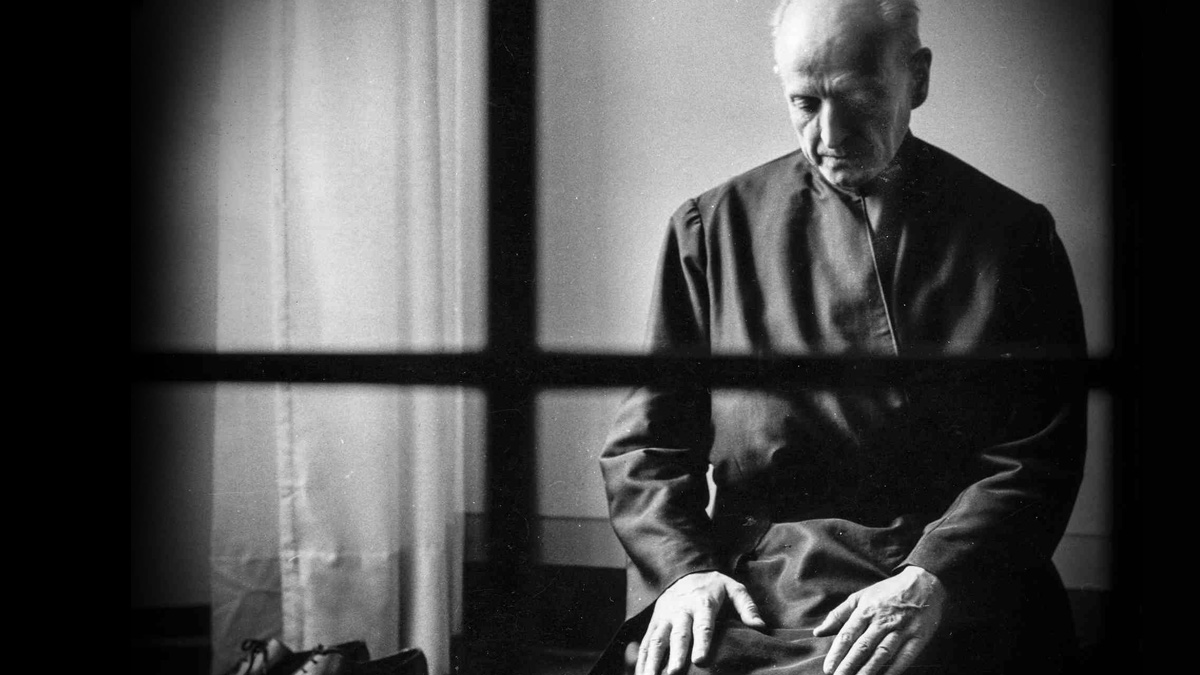
In the Society of Jesus (the Jesuits), this task was placed on the shoulders of Pedro Arrupe, whom the Society elected as Superior General just a few months before the Council ended. From his own experience, especially as a witness to the devastating brutality of the atomic bomb in Hiroshima, Fr Arrupe saw no alternative to the evangelical model already laid down in the social encyclicals of Pope John XXIII and in the Council. ‘This is what must be done’, he later recalled saying to himself around the time of his election: ‘we must make the Society understand the situation in which it finds itself in the world’. He thought it necessary to ask: ‘What must the Society do?… Because the changes in the world were pressing’. (4) He was more explicit in a homily in New York in 1966.
But it is not this new world I am afraid of. What worries me, rather, is that we Jesuits will have little or nothing to offer it, little or nothing to say to it or do for it, so as to justify our existence as Jesuits. I fear that we will repeat yesterday’s answers to deal with tomorrow’s problems… (5)
Arrupe’s commitment to finding new answers to new questions did, of course, lead to considerable disquiet, both among the Jesuits themselves and in the corridors of the Vatican, especially as novel and sometimes radical approaches to theology, sociology, politics, and culture were increasingly apparent in the work of younger members of the Society. Some more conservative Jesuits blamed Arrupe. ‘One Basque founded the Society of Jesus; another one is destroying it’ (6) went an insult written by an anonymous Jesuit in Loyola, Spain.
And it was Jesuits of this kind who seem to have had the ear of Pope Paul VI. When a General Congregation of the Society was convoked to address new needs, the 32nd such in the history of the Society – hence its shorthand title, GC32 – Paul VI evidently feared that the work of the Congregation might lead to distortions of authentic Jesuit spirituality. He addressed – with ‘trepidation’ (7) – the gathered Jesuit fathers, just as they began their work, and urged them to be vigilant ‘so that the necessary adaptation will not be accomplished to the detriment of the fundamental identity’ of the Society. His question to them was the same as Ricoeur’s: ‘Where are you coming from?’ He posed it as the first of three questions he wished the fathers to consider, the other two being ‘Who are you?’ and ‘Where are you going?’ His purpose, though, was conservative in a way that Ricoeur’s was not. ‘Where are you coming from?’ was intended to remind them that who they saw themselves to be and where they saw themselves going must be predicated on clear fidelity to their origins – to their founder’s response in the 16th century to a world in turmoil. The subtext seemed to be that Jesuits in the 1970s were facing nothing that Ignatius had not experienced – his was ‘a world which took on new dimensions from recent geographical discoveries, and hence in very many of its aspects – upheavals, rethinking, analyses, reconstructions, impulses, aspirations, etc. – it was not unlike our own’. (8) The response of contemporary Jesuits, then, should imitate that of their founder.
GC32 did not hesitate to accept as normative both the example of Ignatius and his companions and the outline of the Jesuit purpose as found in papal documents, both of 16th century Popes, Paul III and Julius III, and of Pope Paul VI himself. Yet the fathers were clear that to achieve their foundational ends they had to ‘reflect on our world as Ignatius did on his’. And that reflection led to what Arrupe later referred to as a ‘conversion’ – a radical re-evaluation of the Society’s mission in the light of contemporary realities. In this, it took its cue from the Council and from later ecclesial events, especially the 1971 Synod of Bishops, which emphasised the pursuit of justice as a moral and spiritual imperative in the contemporary Church:
Christian love of neighbour and justice cannot be separated. For love implies an absolute demand for justice, namely recognition of the dignity and rights of one’s neighbour. Justice attains its inner fullness only in love. Because every person is truly a visible image of the invisible God and a sibling of Christ, the Christian finds in every person God himself and God’s absolute demand for justice and love. (9)
The Jesuits’ GC32 similarly affirmed that the struggle for faith included the struggle for justice. The prevalence of injustice, it asserted, ‘is one of the principal obstacles to belief: belief in a God who is justice because he is love.’ (10) And in the core document of the General Congregation, Decree 4, the fathers provided a lapidary summary of their resolutions: ‘The mission of the Society of Jesus today is the service of faith, of which the promotion of justice is an absolute requirement’. (11)
Faith that does justice. The Jesuits formally committed themselves to this at GC32, not as a departure from its original mission as even some of its own people thought, but as an act of radical fidelity to Ignatius’s injunction to set the apostolic purpose of the Society by looking upon the world ‘in order to discover its needs’. (12) As Pedro Arrupe warned his fellow-Jesuits, it would lead in some cases to great suffering and even to martyrdom. ‘If we follow Christ,’ he wrote after five Jesuits were killed between 1976 and 1977, ‘persecution will come’. Just over a decade later came the most commemorated martyrdom of Jesuits committed to justice: on 16 November 1989, six Jesuits on the campus of the Central American University in San Salvador, along with their caretaker’s wife and daughter, were slaughtered by an elite unit of the Salvadoran army. More than fifty Jesuits in all have been violently killed as a consequence of the Society’s commitment to a unified mission of faith and justice.
Last year, 2025, was the 50th anniversary of GC32. To mark this, a symposium was held in Trinity College Dublin in November. The spring 2026 issue of Studies carries the six papers that were delivered on that occasion. In a foreword, Fr Shane Daly SJ, Provincial of the Irish Jesuit Province, reflects on the symposium and introduces the contributions.
- See for example Richard Kearney, Anatheism: Returning to God After God (New York: Columbia University Press, 2011), p. xi, and Daniël P. Veldsman and Yolande Steenkamp (eds.), Debating Otherness with Richard Kearney: Perspectives from South Africa (Cape Town: AOSIS, 2018), pp 31-62.
- Hans-Georg Gadamer, Truth and Method (London: Sheed & Ward, 1979). See the whole of Part II, II, 1 – ‘The elevation of the historicality of understanding to the status of hermeneutical principle’.
- Zygmunt Bauman, Liquid Modernity (Cambridge: Polity Press, 2000).
- From Pedro Arrupe, Itineraire, quoted in Pedro Miguel Lamet, Pedro Arrupe: Witness of the Twentieth Century, Prophet of the Twenty-First (Boston: Institute of Jesuit Sources, 2020), p. 235.
- Lamet, Pedro Arrupe, p. 264.
- Lamet, Pedro Arrupe, p. 327.
- ‘Address of Pope Paul VI to the Thirty-Second General Congregation of the Society of Jesus, December 3, 1974’ in Documents of the Thirty-Second General Congregation of the Society of Jesus (Washington DC: The Jesuit Conference, 1975), p. 133.
- Address of Pope Paul VI, pp. 135-6.
- 1971 Synod of Bishops, ‘Justitia in Mundo’, art. 34.
- Documents of the Thirty-Second General Congregation, p. 8.
- Documents of the Thirty-Second General Congregation, Decree 4, art. 2 (p. 17).
- Documents of the Thirty-Second General Congregation, Decree 4, art. 14 (p. 20).