
‘Not Christian, not Catholic.’
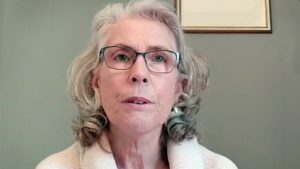
‘Not Christian, not Catholic, and horrifying.’ So says Dr Phyllis Zagano, Professor of Religion at Hofstra University in New York, commenting on the Vatican’s second commission on the diaconate, which recently published a letter revealing a 50/50 split within the commission on whether women could ‘image Christ’.
Listen above to part one of an extended interview with Pat Coyle of Irish Jesuit Communications on the diaconate of women, in which she explains that early church documents show women were ordained as deacons using the same liturgies as men. She also notes how Conciliar documents and 11th-century papal permissions support the ordination of women deacons. She says that no official doctrinal statement has overturned this historical practice, and that to this day Orthodox churches continue to ordain women as deacons.
The ordination to the diaconate (becoming a deacon) is the first level of the sacrament of holy orders. Deacons assist bishops and priests in liturgical functions, service, and charity. They can be transitional (preparation for priesthood) or permanent (not expected to become a priest).
The ordination to the priesthood is the second level of holy orders. Priests have the faculty to celebrate the Eucharist, forgive sins (within the sacrament of Reconciliation), and perform other sacraments, especially the Eucharist and Anointing of the Sick (in certain contexts). Priests are typically assigned to preside at Mass and ministry in a parish or other canonical mission.
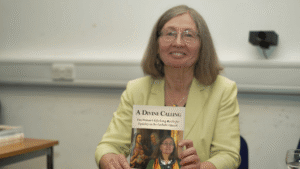
Dr Zagano is the author of many books and a specialist on the diaconate. She was appointed to Pope Francis’s first commission on the diaconate in 2016.
Dr Zagano emphasises that women served as deacons in the early Church, citing patristic sources and early Christian writings. She says that the diaconate for women was not merely a ceremonial role but involved liturgical and sacramental functions, particularly in service-oriented tasks and evangelisation.