
Accompanying with presence and compassion
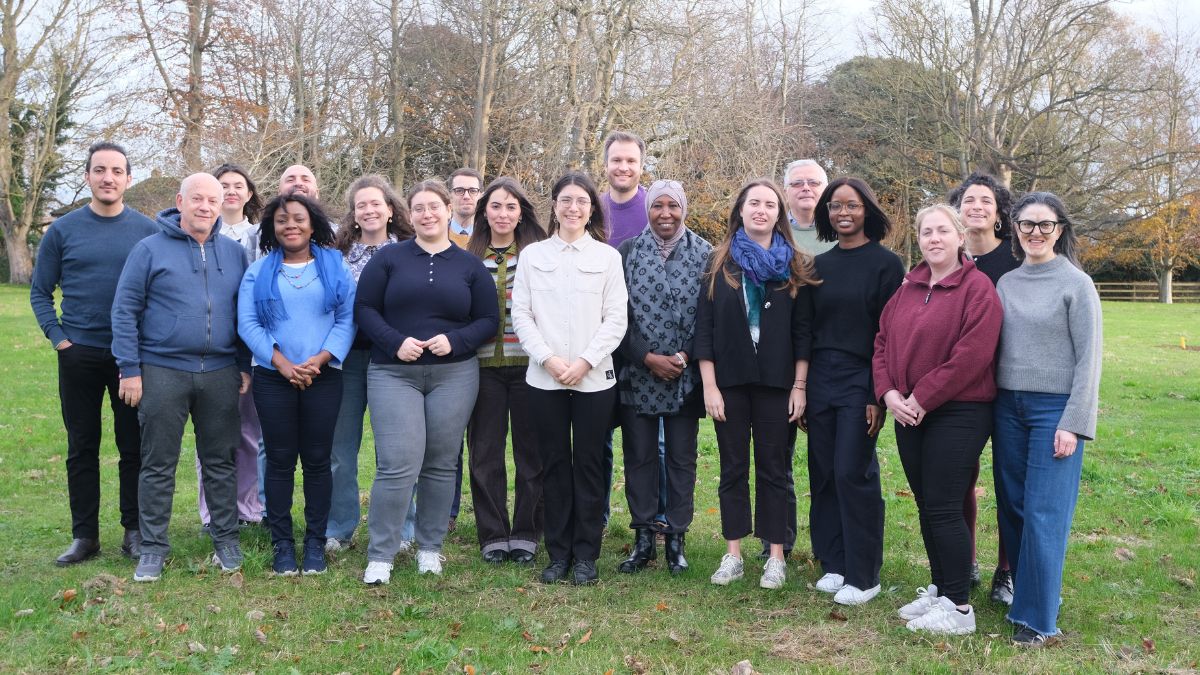
Detention visitors, staff, and partners from across the Jesuit Refugee Service Europe network, gathered in Dublin for the 19th Detention Visitors Support Group (DVSG) training which took place from 24 to 27 November 2025. It was organised jointly by the Jesuit Refugee Service Europe and the Jesuit Refugee Service Ireland.
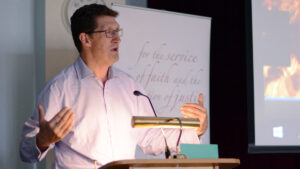
Speaking at the conclusion of the DVSG, Eugene Quinn, National Director said, “JRS Ireland was delighted to welcome detention visitors and colleagues from offices across Europe for the first ever DVSG to be hosted in Ireland. Manresa was a most suitable and empathic location for an event themed on ‘Cura Personalis: Caring for the Detainee and the Visitor’, which invited participants to attend more deeply to the human, relational and spiritual dimensions of visiting people in immigration detention”.
Read below a full account of the event from JRS Ireland.
‘A Renewed Sense of Community’
Reflection and self care
The meeting opened on Monday afternoon with words of welcome from the JRS Ireland Chair and Assistant Director, followed by an introduction to the year’s theme by Tony O’Riordan SJ. Participants were invited into a reflective walk through the Manresa grounds, creating space for silence, grounding, and shared initial insights.
The training was punctured over the course of the four days with opportunities for reflection and self-care. On Tuesday Capacitar facilitated a session offering participants innovative and practical techniques for improving wellbeing and to decompress. The knowledge and learning from this and other similar sessions during the training were designed to ensure the detention visitors are attentive to their own needs and to help them reduce the risk of burn out.
Sharing experiences across Europe
Tuesday brought a renewed sense of community. During the exchange, participants described common pressures across detention contexts. In the UK, age-dispute cases make supporting minors more challenging; in Luxembourg, teams keep up efforts to increase influence but are frustrated by instance where people are being released without follow-up support. Belgium reported gaps in medical and mental-health provision for immigration detainees. While Croatia currently has no access to detention centres, despite continued advocacy in that direction.
These barriers to service delivery contribute to shared fatigue for detention visitors yet also reinforce key learnings: to act when support opportunities arise, to stay well-organised, set realistic expectations, and to continue to advocate for stronger post-detention policies.
The group then explored the Irish context, where immigration detainees are held in prisons and Garda stations. The living conditions echo issues experienced in other detention locations across Europe: overcrowding, rising addiction issues, language barriers for asylum seekers, and a strong security focus that shapes public perceptions. Together, these insights highlighted the continuous need for steady presence and compassion in increasingly difficult environments.
The day concluded with an overview of current EU developments by Mariza Koronioti, Policy and Advocacy Coordinator at JRS Europe, focusing in particular on the proposed Return Regulation and the significant risks it carries—especially the expansion of detention, reduced safeguards, and a more punitive approach to applicants overall. The discussion also highlighted how public and political perceptions of migration increasingly frame detention as a tool of control and deterrence, reinforcing narratives that undermine dignity and fuel restrictive policies.
Learning, visiting, and communicating
Wednesday’s programme deepened the policy and practical discussions. A representative from Irish Penal Reform Trust outlined its work with JRS Ireland on alternatives to detention. Key challenges within the Irish system were highlighted: criminal lawyers being assigned to asylum seekers without adequate immigration-law expertise, severe prison overcrowding leading to escalating mental-health concerns, and conditions that can amount to inhuman treatment. Proposed pathways forward included using prison strictly as a last resort, reassessing prison capacity, strengthening community-based alternatives and post-detention support, and increasing investment in drug-treatment services and probation programmes.
Later, a session led by Vincenzo Chiaiese, Communication Coordinator at JRS Europe, explored how cura personalis must also shape the way we communicate about detention. The presentation introduced five key pillars for communicating on sensitive topics and invited participants to analyse how even small changes in wording can influence public perception or unintentionally create harm. Through practical activities and collective brainstorming, the group examined examples of problematic language and worked together to reformulate them in a way that protects people’s dignity. The session concluded with an emphasis on choosing words with precision and care, ensuring that communication remains ethical, protective, and aligned with JRS values.
Colleagues from JRS UK then shared insights from their work, highlighting the realities of detention in the UK, the growing vulnerabilities among people held in detention, and the need for stronger safeguards and more humane alternatives. Their contribution helped participants compare trends across countries and recognise both common challenges and distinct national dynamics. In the afternoon, participants visited the National Reception Centre at Balseskin ». The visit offered a closer look at initial reception conditions in Ireland: a tour of the facilities, an introduction to the JRS Ireland Fáilte Project, and a session on responding to vulnerability with the HSE Health Centre team.
Closing Session
The closing morning on Thursday opened with the screening of 142 Years, a documentary narrating experiences of migration, displacement, and resilience. The film prompted rich group reflections on accompaniment, humanitarian responsibility, and the emotional weight that visitors often carry.
The gathering ended with a collective evaluation, expressing gratitude for the space to reconnect, learn from one another, and reaffirm the commitment to accompany people in detention with presence, dignity, and compassion.
Final Reflections
In conclusion, Mr. Quinn also acknowledged all who contributed to the successful delivery of the training He said, “JRS Ireland would like to express our sincere gratitude to the team at Manresa Retreat House who were such generous hosts. Also, we are very grateful for the valuable and insightful contributions from guest speakers and facilitators, including Sarah Jane Craddock (Dóchas Centre), Patty and Vera (Capacitar Ireland), Niamh McCormack (Irish Penal Reform Trust) and Fáilte Project partners at the Balseskin National Reception Centre.
A special thanks to Brian Lennon SJ, JRS Ireland Chair, for officially opening the training and to Tony O’Riordan SJ and Peter McVerry SJ for sharing their wisdom and experience. Finally, to acknowledge the work of our colleagues from JRS Europe and the JRS Ireland team members, Anna Charalambidi, Gillian McGinley, Chloe Ladeira and David Moriarty in ensuring the event ran smoothly.”