
Restoring women to a recovered diaconate
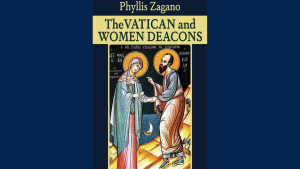
In this second part of an extended interview with Pat Coyle of Irish Jesuit Communications, Dr Phyllis Zagano, Professor of Religion at Hofstra University in New York, continues her straight-talking exposition of the long‑standing question of women in the diaconate. She seeks to ‘recover’ the diaconate and ‘restore’ women to it through her extensive research and writings.
The issue of the exclusion of women from the diaconate, she argues, is one of tradition and culture rather than theology. This is fully exemplified in the recent December letter (2025) published in Italian and emanating from the Vatican’s second commission on the diaconate. The letter reveals a 50/50 split within the commission on whether women could ‘image Christ’. Quoting from one paragraph in it, she says the technical term to describe this section is ‘crazy!’ The document is “so bad it’s good,” she explains, meaning it is so full of theological holes that it will be easy to dismiss.
Dr Zagano notes that in the early Church, the diaconate was a ministry of service—focused on care for the poor and community organisation—not simply a step toward priesthood. Only later did it become part of the clerical “career ladder.” The Second Vatican Council sought to recover that original vision by restoring the permanent diaconate and distinguishing it from priestly ordination.
She explains how opponents of women deacons argue that Holy Orders forms one indivisible sacrament—bishop, priest, and deacon—and since women cannot be priests, they cannot be deacons. Dr Zagano counters that the diaconate has its own identity, historically and theologically distinct from the priesthood, citing evidence of women deacons in early Christian communities, especially in the Eastern Church.
Resistance to women deacons reflects deep cultural and institutional forces, according to Dr Zagano, including clericalism, fear of doctrinal change, and longstanding gender bias. The debate is not merely about roles but about participation and credibility: if all the baptised are equal in dignity and mission, can the Church’s structures continue to say otherwise? The discussion, she suggests, ultimately tests how seriously the Church takes its own theology of service and inclusivity.