
‘A smile that needs no translation’
In September 2025, Joe Munnelly, Communications and Research Officer with Irish Jesuits International, visited some of the projects funded and assisted by IJI in South Sudan. He was deeply touched by the people he encountered and the work he witnessed. Read below his account of a memorable visit to Akol Jal in South Sudan, a village in a region where violence was rampant during the recent civil war.
The lady in red
There are so many remarkable moments from my trip to South Sudan, which was an absolute whirlwind across such a vast country. I travelled in September, just before the unbearable heat of an African summer, to visit the many projects made possible by the support of our many friends and donors.
I will remember forever the day heavy rains swept across the landscape, and I was welcomed into somebody’s home and tukul. A sudden downpour meant we had to run for cover as we walked in between tall grasses and bush.
I had travelled with my colleagues Emer Kerrigan (Irish Jesuits International (IJI) deputy director) and Rutsuko Mutsomoto (IJI International Grants Officer), and I was weary as I carried my camera and meandered around mud and puddles.
We were in one of the most isolated places in the world. A rural village called Akol Jal, in Rumbek in South Sudan. Violence during the civil war was rampant only a few years ago in this region, and the surrounding villages were home to marginalized communities, mostly widows and female-headed households.
We were guided by Fr Eric Wanyonyi SJ, the director of the Multi-Educational and Agricultural Jesuit Institute of South Sudan (MAJIS), and a local teacher, Gabriel, our translator. Since 2014, MAJIS has addressed food insecurity across the entire county –roughly 288 villages – which is home to the most marginalised communities in the country. The project focuses on women and knowledge transfer for sustainable farming, good agricultural practice, and appropriate land use.
Before the project, rural women suffered food shortages as climate change brought additional hardships, and many relied solely on farming for survival. Their lives have now been transformed in this Misean Cara climate award-winning project.
Fr Eric has worked tirelessly to build sustainable farming enterprise, and to empower local farmers in the most marginalized areas of South Sudan. On my visit that day we met farmers proud of their work and proud of how far they had come. This project brought hope to forgotten lands.
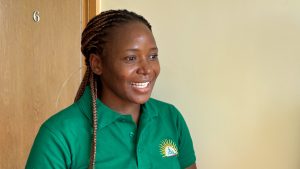
The rain got increasingly heavier, and as the grasses came to an opening, a tukul (a grass-roofed hut) and fenced plot greeted us. We were quickly welcomed and ushered inside. Atuenydelg wore a bright red dress. It was the first thing I noticed as I entered her home. My eyes took a moment to adjust to the drastic change from bright to dark.
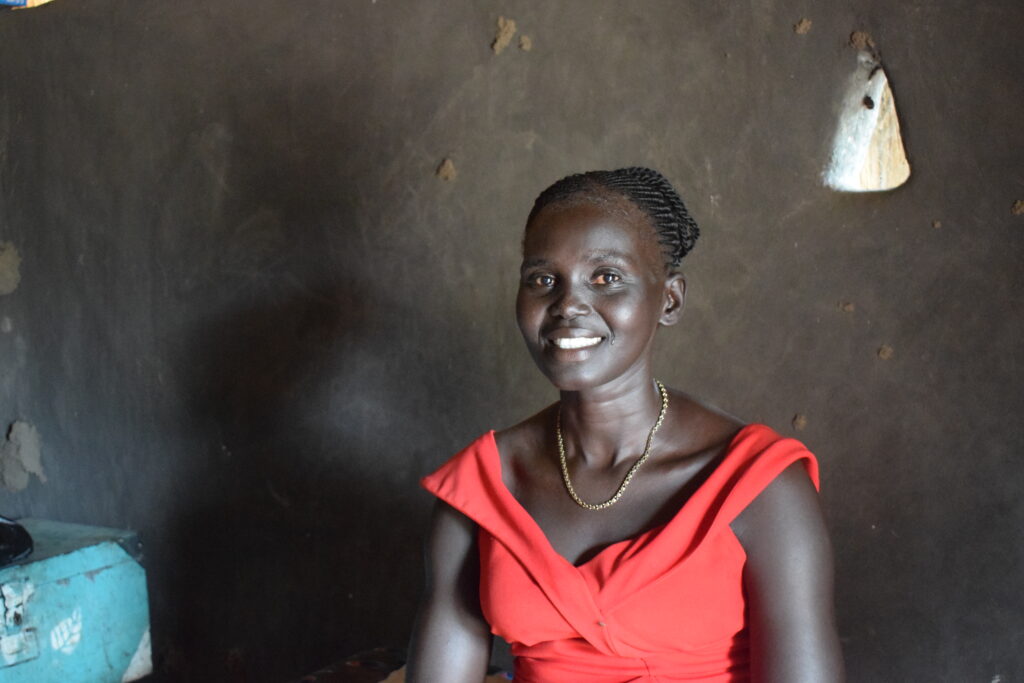
The tukul was small and accommodated two beds and a dresser. She gestured towards the bed and we all scooched in, thankful to be out of the rain. She smiled warmly at us, and I asked would it be ok to record her voice as we spoke about her life and her thoughts on the project. Gabriel translated my question, and our conversation would bounce back and forth as rain tapped above us.
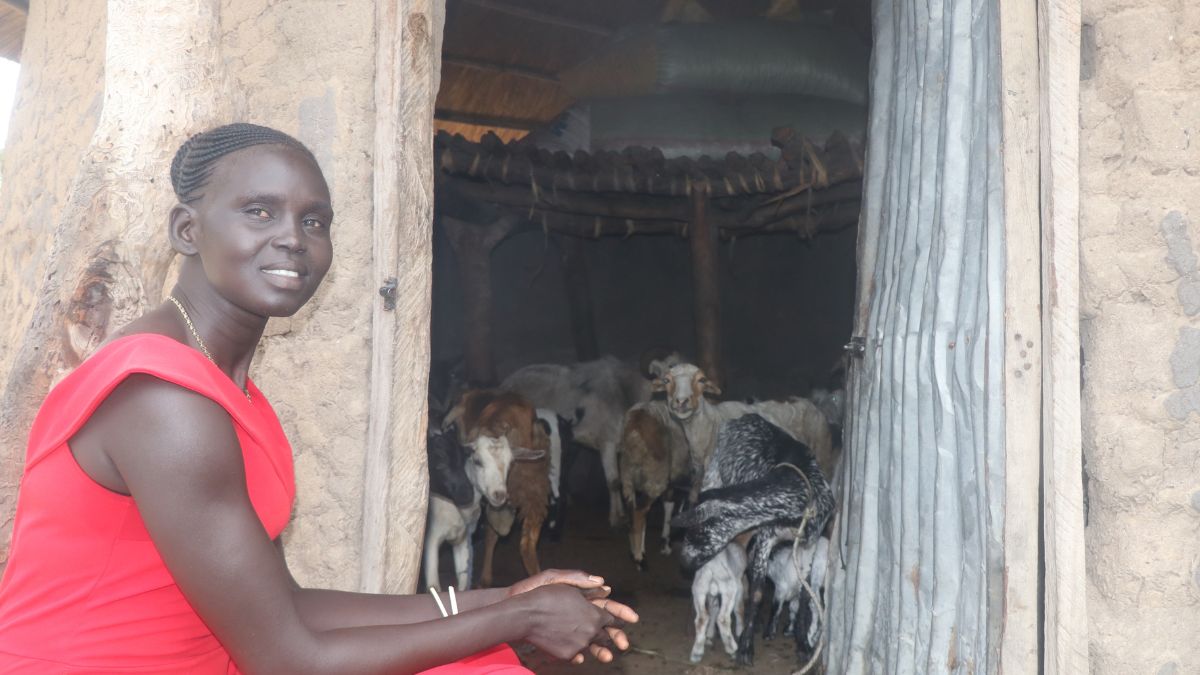
Atuenydelg tells us she has six children and gestures outside into light. She grows pumpkins, groundnuts, and okra, and her crops surround the tukul. She takes the produce to the town market by bicycle, and her hard work has meant she can buy goats – she is a proud herder now. Her eyes light up when she explains that she started with four goats and now has twenty. When the rain stopped, she would later show us the pen she keeps them in when they aren’t grazing.
The goats aren’t just a source of food. “When my children need school fees, I sell the goats to keep them in school,” she explains. “My husband sees the value of education – I’m happy for that”. She smiles, “I am happy for them.”
At IJI we want to continue supporting marginalised communities so that others can smile like Atuenydelg. I returned to Ireland reenergised to share stories like this one and get others involved in transforming the lives of those, despite being so far away, share similar hopes and aspirations.
This New Year you can do something really special and empower women, like Atuenydelg, to continue supporting themselves and their families. With the gift of a goat, you can give a mother a chance to add goat milk to her children’s diet, use its dung as fuel and fertilizer, and continue to support communities sowing life and hope into forgotten lands.
Click here to find out more about our projects in South Sudan », and browse here for other meaningful gifts » to do something amazing this year.