
‘Theological Ethics for a Global Church’
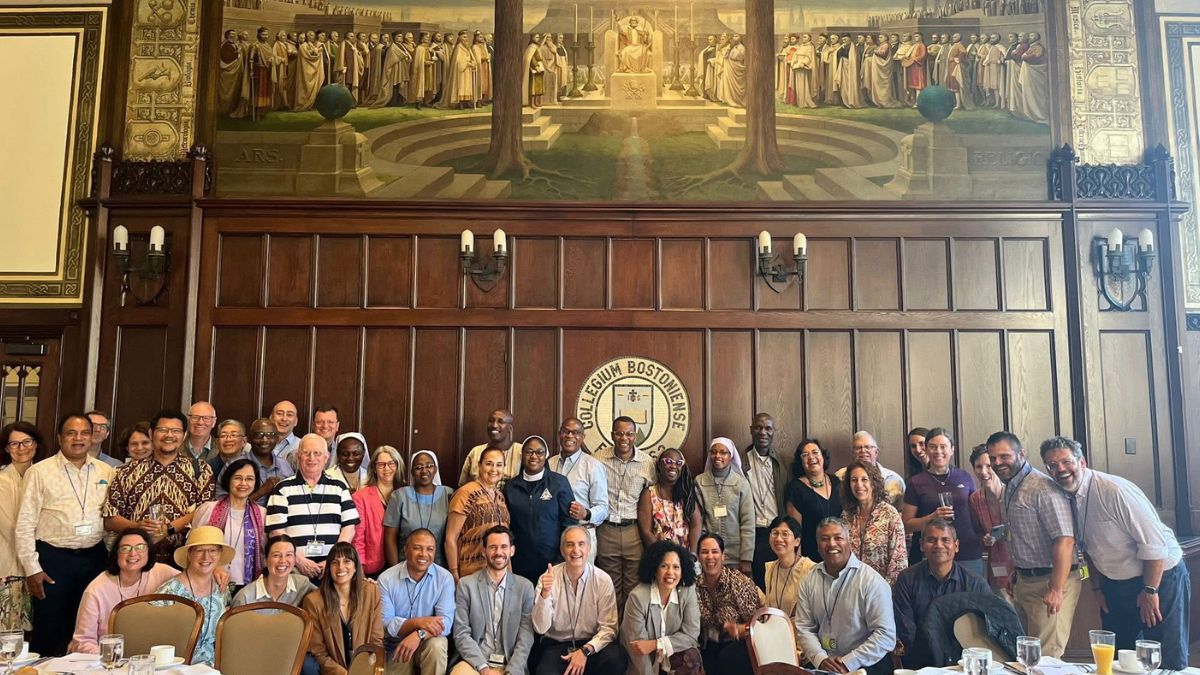
Dr Kevin Hargaden, social justice theologian with the Jesuit Centre for Faith and Justice, attended a gathering of over 50 ethicists from every continent in Boston College SJ this summer. The theme of their meeting was ‘Discerning Hopeful Pathways for a More Just World’. Over a number of days they explored challenges such as migration, populism, ecological breakdown, and the role of theology in increasingly polarised political cultures. Read Kevin’s reflections on the event below.
Theological Ethics for a Global Church
The Catholic Theological Ethics in the World Church (CTEWC») was established by the Jesuit theologian, Jim Keenan» in 2003. He and his co-leaders sought to cultivate a truly global network of Catholic ethicists. In the years since they have certainly succeeded, organising a series of monumental conferences» and publishing important volumes». As Keenan later explained, the network developed as a mode “of engagement not dominated by the northern paradigm” driven just by the concerns of Western Europe and North America. Instead, it recognises the truly global nature of the church and therefore the truly global nature of theological research.
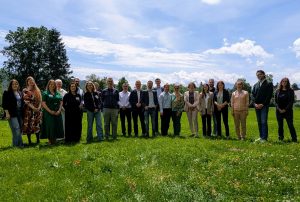
In July 2025, this vision was embodied once again in the gathering Discerning Hopeful Pathways for a More Just World at Boston College. Around fifty ethicists from every continent came together to reflect, discern, and plan. The format was deliberately dialogical rather than lecture-driven. Participants spent extended time in small discussion groups composed of colleagues from a wide range of contexts. I was placed in a group alongside Kristin Heyer», Simeiqi He», Sigrid Müller» (our leader), and Jason King» (our recorder), among others. These conversations allowed us to explore urgent challenges such as migration, populism, ecological breakdown, and the role of theology in increasingly polarised political cultures.
The meeting also provided an opportunity to map out the research interests currently animating the network. My own review in advance of the meeting revealed the vibrancy of CTEWC scholarship: flourishing work on social and ecological ethics, and increasing engagement with questions of race, gender, and technology. It was notable, however, that certain areas remain relatively underdeveloped, especially theological work on capitalism, secularism, and justice within the Church.
While these structured sessions were important, the informal encounters proved equally valuable. Meals and walks across the Boston College campus became occasions to form friendships and exchange experiences from very different pastoral and academic settings. For me, it was encouraging to discover how challenges we face in Ireland resonate with those encountered in Africa, Asia, and Latin America.
The title of the gathering was well chosen. Discerning Hopeful Pathways for a More Just World expanded my own horizon, not only by exposing me to the breadth of theological-ethical scholarship alive in the world Church today, but also by deepening my conviction that Catholic ethics must be both globally attuned and locally rooted. I returned home grateful for the generosity that marked the meeting and hopeful for the collaborations it has set in motion.