
Mary’s ‘yes’
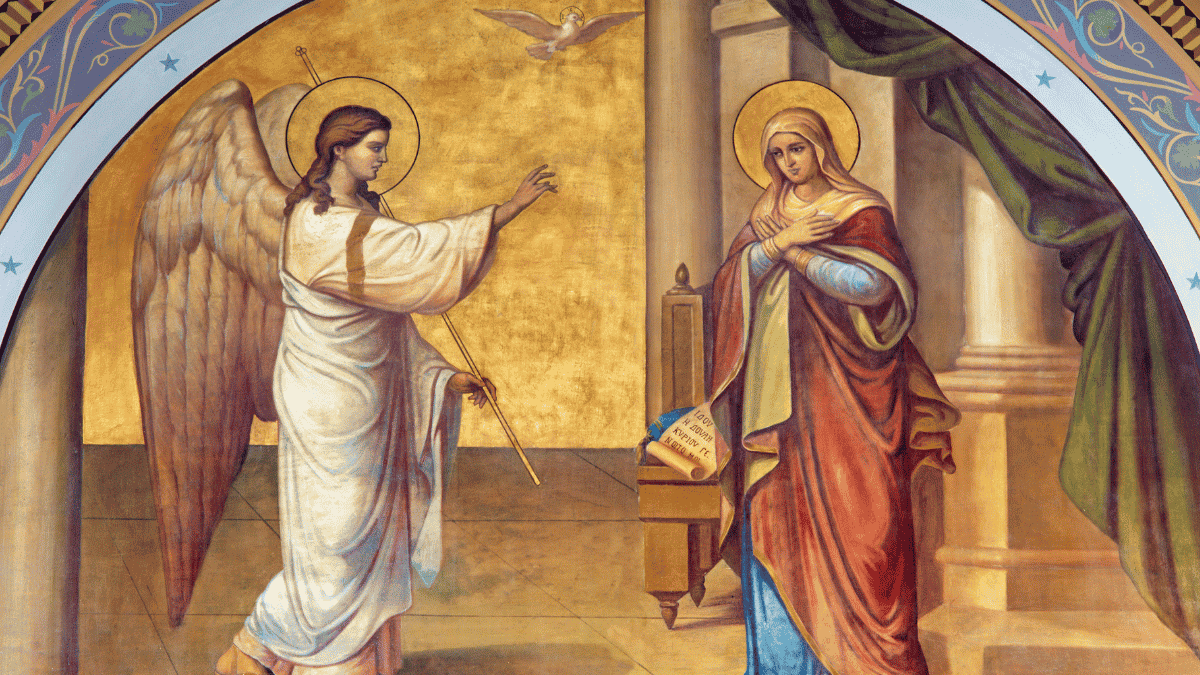
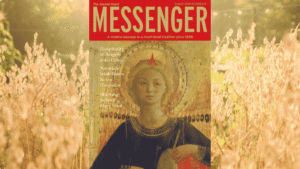
May is the month of Mary, a time traditionally associated with springtime and its themes of renewal and motherhood. To mark this month, we offer a recent Messenger article, ‘Mary’s Yes’ written by Gerard Condon, parish priest of Killavullen, County Cork.
Fr. Condon reflects on the significance of the Feast of the Annunciation and Mary’s response to God’s call. Drawing on scripture, church tradition, and theology, he explores Mary’s courage, faith, and humanity. He presents her “yes” as a defining moment in salvation history and a model of real trust and surrender.
Mary’s Yes
Each year the Church observes four ‘solemnities’ to honour Our Lady: on 1 January, Mary the Holy Mother of God; on 25 March, the Annunciation of the Lord; on 15 August, the Assumption of the Blessed Virgin Mary and on 8 December, her Immaculate Conception.
This month’s feast day is based on an incident at the beginning of Luke’s Gospel (1:26–38). The Angel Gabriel appeared to Mary and ‘announced’ that God had chosen her to be the mother of his Son. Her response in the affirmative was a defining moment in salvation history.
The choice of 25 March for this feast day, is appropriate as it is precisely nine months prior to the Nativity of the Lord on Christmas Day. Mary’s yes to God is also remembered each time we pray the Angelus.
The other three solemnities remind us of things that set Mary apart. They developed with Christian tradition down through the centuries. The title ’Mother of God’ (Theotokos, literally, ‘God bearer’), given to Mary at the Council of Ephesus in 431, was a way of affirming Jesus’ divine nature during the Arian controversy.
The teaching that Mary was born free from Original Sin received its impetus from St Augustine in the fifth century, and was not formally proclaimed until 1854.
It was not until 1950 that the dogma of the Assumption was declared. This dogma concerns the afterlife and how, at her death, Mary was ‘assumed’ body and soul into heaven.
By way of contrast with these lofty theological truths, the Annunciation takes us to the heart of Mary’s humanity, her personal faith. And while there are whispers of the other Marian solemnities in the Bible, in the case of the Annunciation we have a complete account.
Scripture scholars tell us that the narrative has origins in Mary’s own recollections, given by her to the first disciples following the Resurrection and recorded by them, some decades later, in the Gospel of Luke.
Luke assembled Mary’s memories using the stylised format of the vocation story that is found many times in the Old Testament (for example, regarding Moses in Exodus 3:1–12 and in Isaiah 6:1–13 and Jeremiah 1:4–19).
Firstly, there is a divine revelation to the person and the invitation to a mission. This is followed by the person expressing their sense of inadequacy and the reassurance from God, ‘do not be afraid.’ The person will be strengthened with spiritual gifts. Finally, the person accepts their calling.
Each of the prophets would then share the ‘Word of God’ they had personally received with many others. Mary would do so not just by the manner of her life, but literally, in her womb. It involved the gift of God’s only begotten Son.
There is no biblical precedent for such a radical intervention in human history as the one made by God at the Annunciation. It is also remarkable that Mary conceived Jesus while remaining a virgin. Her pregnancy came about by the power of the Holy Spirit and not by way of intercourse with St Joseph.
Medieval artists, like Fra Angelico, capture the scene beautifully, with Mary gracefully bowing her head before the angel Gabriel. Contemporary religious art, on the other hand, sometimes depicts Mary alone, and there is little more than an allusion to the angel’s presence.
While we would like to think that divine revelations have a substantial quality, they are, more often wholly interior experiences. Such an interpretation actually strengthens my esteem for the Blessed Virgin.
Just like us, Mary needed to discern and come to terms with what God was asking. She was ‘deeply disturbed’ and wondered ‘how it could possibly come about’ (Lk 1:29, 34).
After all, she was a powerless young woman (probably a teenager), in a culture that was biased against women. But Mary also recognised her inner strength and came to know that she had won God’s favour. She put her trust in the Lord’s promise and surrendered to God’s will.