
Urgency and solidarity on global climate demonstration
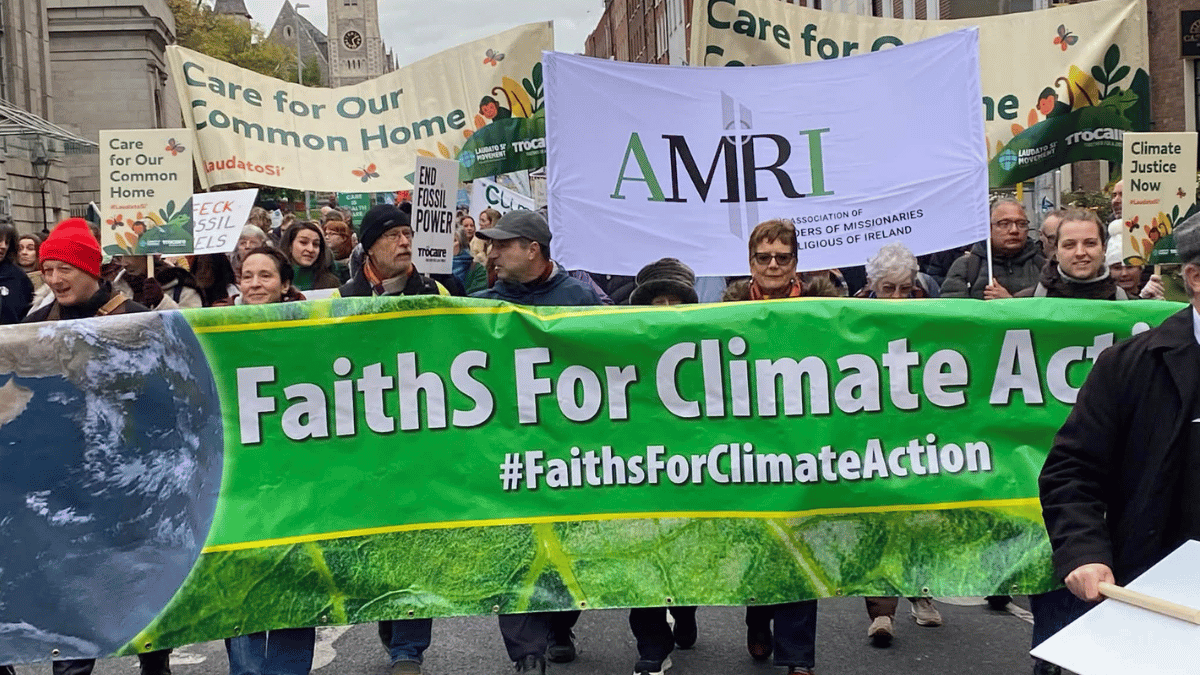
The Jesuit Centre for Faith and Justice » was one of a number of faith groups that took part in the annual Global Climate Demonstration on Saturday 14 November 2026. Thousands of people filled the streets of Dublin for the march that brought together activists, families, students, along with community and faith groups such as Trocaire, the Laudato Sí movement and AMRI, all calling for urgent action on the climate crisis.
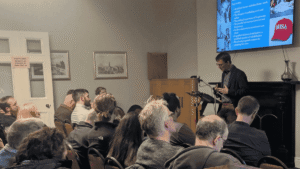
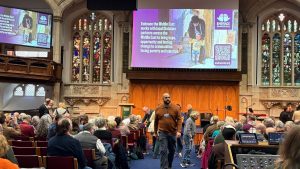
The procession made its way from the Garden of Remembrance in the city centre toward Leinster House at 1pm, and there was also a a pre-demonstration prayer service at 12.30pm for those wishing to attend. The service was preceded by a screening of the End Fossil Power documentary by Trócaire in the James Joyce Centre.
The JCFJ is an active member of Stop Climate Chaos coalition (SCC), a network of environmental groups, development NGOs, human rights advocates, and faith-based organisations, advocating for faster, fairer climate action. SCC led the coordination of the national demonstration to urge the government listen to the demands for more climate action.
According to the JCFJ “Communal climate action, in the form of protesting together and demanding action from our representatives, is a powerful and important demonstration of ecological care and one in which we can all take part.” The centre warns that without deliberate attention to equity, climate transitions risk deepening existing inequalities. They called for just transition measures including support for workers in fossil-fuel sectors, investment in community-led green projects, and protections for low-income households.
Members of the faith groups processed together, with banners emphasising stewardship of creation and solidarity with climate-affected communities worldwide. Their presence underscored how faith-based organisations see climate change as not only an environmental or economic issue but also an ethical, justice, and humanitarian crisis.
Overall, organisers said the turnout reflected broad public concern about the pace of emissions reductions and the need for concrete, equitable policies. Marchers carried placards demanding stronger national targets, accelerated investment in renewable energy, an end to fossil fuel expansion and climate justice for communities already bearing the brunt of environmental damage. Speakers at a rally stressed both the scientific evidence for rapid cuts in greenhouse gases and the moral imperative to protect vulnerable people and ecosystems.
Among placards and chants, there were also creative interventions: a ‘human chain’ display, street theatre on the cost of inaction, and local school groups presenting climate pledges. The atmosphere combined urgency with solidarity as older activists marched alongside teenagers, and faith leaders stood beside grassroots organisers.
As the day closed, organisers urged politicians to translate the visible public mandate of the demonstration into policy, reminding officials that citizens across faiths and varied backgrounds are watching closely.