

The spiritual impact of abuse
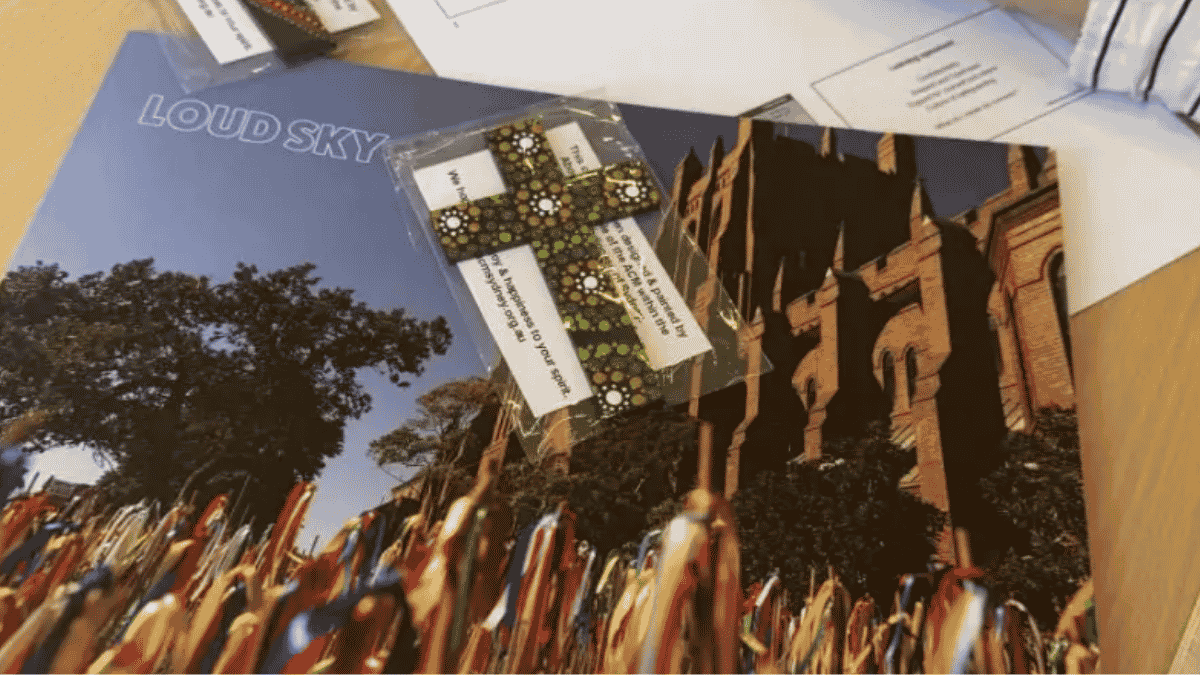
Safeguarding Manager for the Jesuits, Ms Saoirse Fox, reflects on the importance of recognising the spiritual impact of abuse within the church. Drawing on her participation in a recent formation day led by Dr Jo Durkin of the Trauma-Informed Spiritual Care Initiative (TISCI) at St Vincent’s Health Australia, she considers how the concept of spiritual harm can inform safeguarding practice and pastoral response. Saoirse also explores the role of faith communities in acknowledging this dimension of harm and highlights initiatives such as Towards Peace » that seek to support those who have experienced abuse perpetrated by members of the Church. Read her full reflection below.
Abuse and spiritual harm
“I’ve completely lost my connection to a power greater than me, and completely lost my connection to myself.”
(Male survivor in his 60s, Trauma Responsive Spiritual Care Initiative, St Vincent’s Health Australia)
Is every act of abuse a form of violence against a person’s soul or spirit? If abuse occurs within a faith context, is the spiritual harm even greater? If we answer “yes” to these questions, what obligations then fall on faith communities to address that harm?
On 20 July 2026, I travelled to Northampton to attend a day of formation led by Dr Jo Durkin, Director of the Trauma Informed Spiritual Care Initiative (TISCI) at St Vincent’s Health Australia ». The training was titled Responding to the Needs of People Who Disclose They Have Suffered Sexual Abuse in the Church ».
In Ireland, the National Board for Safeguarding in the Catholic Church » already provides “training for trainers” to safeguarding personnel with a strong module on responding to disclosures of abuse. Compassion and presence are central principles of that training. Had I seen only the title of Dr Durkin’s course, I might have assumed it would cover familiar ground. However, I attended on the recommendation of a trusted colleague.
Some readers will remember my former colleague, Loraine Byrne. Loraine and her family moved to Australia in 2024, and I still miss her friendship and collegiality. What I have always appreciated about Loraine is her sincere commitment to standing in compassion and solidarity with those who have experienced abuse, combined with the wisdom she consistently brought to our shared work. So when she introduced me to Dr Jo Durkin after attending one of her courses in Australia, and suggested there might be value in connecting, I trusted her judgement.
The Diocese of Northampton kindly hosted the training, which was supported and funded by the Conversations, Culture and Communion project at Durham University (information on the project below). Much of the training content resonated with approaches already familiar within Irish Church safeguarding, particularly the emphasis on presence, listening and responsiveness. What felt distinctive, however, was the explicit recognition of spiritual harm as a direct consequence of abuse, not merely a secondary effect but one of its intrinsic wounds. Naming that reality creates its own call to action.
Dr Durkin leads the Trauma Informed Spiritual Care Initiative. As St Vincent’s Health Australia explains: “In 2019, SVHA was called upon by a group of survivors of sexual abuse in the Catholic Church to respond to an unmet need at the intersection of spiritual and health care. Our answer to their call has been co-designed with survivors and finds its expression in the Trauma Informed Spiritual Care Initiative (TISCI).”
The day of formation, together with earlier conversations with Dr Durkin, prompted me to reflect more deeply on what we mean by spirituality and spiritual harm.
Within the Jesuit Irish Province, our response in recent years to the legacy of child abuse and its wide circle of victims has been informed by principles of restorative justice (RJ). Restorative justice foregrounds relational harm, recognising that serious wrongdoing affects not only relationships with others, but also relationships with oneself and with that which gives life meaning and purpose.
In its broadest sense, spirituality can be understood as the way we relate to ourselves, to others and to something larger than ourselves, which for many people is God. Viewed through that lens, restorative justice might even be described as carrying a spiritual dimension, albeit one that can operate comfortably within secular settings.
Yet while restorative justice fits readily within a secular framework, many of us working in Church safeguarding can be more hesitant when it comes to speaking explicitly about spiritual harm. If a person who has experienced abuse identifies a need for spiritual support, I will readily move into that space. Otherwise, mindful that the abuse occurred within a religious context, I tend to maintain a respectful distance out of sensitivity to their experience.
This brings me back to the questions posed at the beginning. If abuse within a faith context constitutes a profound form of spiritual harm, then we must take far more seriously our responsibility to address that harm. We need to recognise spiritual injury as distinct from, though deeply intertwined with, emotional and psychological harm.
The St Vincents Health TISCI website quotes a support person describing spiritual harm in these words: “It robs people of trusting in what matters…. It can be a theft of access to what gives life.”
That description captures something profoundly important. Spiritual harm can involve the loss of trust, meaning, purpose, belonging or connection. It can create a rupture in a person’s relationship with faith, with community, with self, and with whatever they understand as sacred.
In Ireland, we are fortunate to have Towards Peace », a spiritual support service for people affected by abuse in a Church context. The service offers one-to-one spiritual accompaniment to those who wish to explore the impact abuse has had on their spiritual lives, beliefs, relationships and sense of meaning.
One person who engaged with the service described their experience in these words:
“Towards Peace has given me the opportunity to address the impact that abuse by a Catholic priest has had on my life, particularly my vocation, faith and relationship with Jesus/God. I have felt heard, respected and understood as I work through the spiritual consequences of the abuse in my daily life.”
Attending to the spiritual dimension of abuse does not imply an effort to draw people back into Church life. One of the great strengths of Towards Peace is that it has no such agenda. The accompaniment it offers is centred entirely on the individual. It provides a compassionate space in which people can acknowledge loss, explore the impact abuse has had on their spiritual lives and, if they wish, consider new ways of relating to questions of faith and meaning.
Whether someone chooses to revisit matters of faith is entirely their decision. Nevertheless, I believe it is vital that those of us involved in Church safeguarding are willing to name the reality that abuse within Church settings can cause profound spiritual injury.
Another offering in response to spiritual harm and need that I recently came across, is an online Week of Guided Prayer for Those Affected by Clergy Abuse – 18 to 23 October 2026 ». Led by Sarah Young at the British Jesuit Institute, the programme will provide a gentle and supportive space for reflection, prayer and spiritual accompaniment for anyone affected, directly or indirectly, by clergy abuse. I have confirmed that registrations from Ireland are welcome. Team members are available to speak with anyone considering participation who may have questions in advance, and the safeguarding officer is also available for discussion before the retreat begins if that would be helpful.
The training day I attended in Northampton was funded by Conversations, Culture and Communion: Networking for Church Vitality and Health, a three-year initiative led by the Centre for Catholic Studies at Durham University. The project builds on the recommendations of The Cross of the Moment, the Boundary Breaking Project’s landmark study of clerical sexual abuse in the Catholic Church in England and Wales. The Cross of the Moment report throws light on “deeply rooted aspects of our life together (in Church) that we need to consider and grow from. The Conversations, Culture and Communion initiative seeks to foster healthier Church cultures through dialogue, participation and shared learning.
Towards Peace Contact Details
Ms. Una Allen, Coordinator
Phone: + 353 (0) 1 5053028
Mobile: + 353 (0) 86 7710533
The service is available on Monday and Tuesday from 9am – 4pm and on Wednesday from 9am -12 noon.
Email: [email protected]
Website: www.towardspeace.ie


