
A Saint for our times

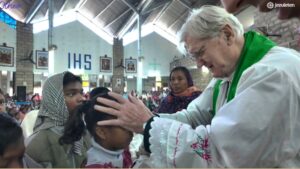
This year marks the 800th anniversary of the death of St Francis of Assisi (1182–1226), the Italian friar and preacher whose life of radical simplicity, love for the poor, and reverence for all creation transformed medieval Christianity. Born Giovanni di Pietro di Bernardone, he renounced his wealth to found the Franciscan Order, emphasizing poverty, humility, and hands-on service. He was celebrated for his compassion toward animals and the natural world, and is an enduring symbol of peace, ecological stewardship, and compassionate faith. (Photo: Francis of Assisi, Ards Friary, Co Donegal).
Fr John Cullen is a priest of the Diocese of Elphin who has written a two-part article on Francis for the Messenger, marking his anniversary. Part one was published in September and is our featured article of the month from the magazine. Part two will follow.
The Poor Man of Assisi
Early on in Liliani Cavani’s film Francisco (1989), a troubled Francis, played by actor Mickey Rourke, takes refuge in a dilapidated chapel. He wakes in the morning, having slept against a painted crucifix, which he now raises above the altar, pressing his face to the figure of Christ. Francis is disillusioned with the hedonism of his youthful friendships in Assisi and chastened by his shocking experience of war and imprisonment. He is struck by a newfound, radical and consuming passion for Jesus. He chooses to live a life of absolute poverty. The scene takes its inspiration from the letter recounted in the early sources of Francis’s encounter with a crucifix in the ruined chapel of San Damiano, outside the walls of Assisi, when the image of Christ spoke to him saying, ‘Francis, go rebuild my house, as you see it is being destroyed.’ This encounter in San Damiano influenced the life, words, actions, mission and message of Francis.
By the time that Francis was declared and canonised a saint in 1228, just two years after his death, his name, image, witness and words were spreading across Italy and Europe as the Order of Friars Minor flourished and expanded. He was the ‘influencer’ of his day, though he may not have realised it! Pictures of Francis were accompanied by miracles, legendae (biographies) and florilegia (stories), and his teaching regarding the fraternity of all living creatures and service to the poorest in society had a powerful impact on his times.
Francis preached the love of God to all fellow human beings. He composed poetry. He sang, danced and prayed with his band of brothers. He spoke to animals. He pacified warring factions in the communes of medieval Italy. His encounter with the Sultan of Egypt was notable for the respect the two men accorded to each other and has inspired in recent times a renewed effort at dialogue between religions. Francis continues to be an inspiring and influential figure today for Christians and non-Christians alike: for pacificists and environmentalists, for those who clamour for social justice, for those wanting change, for animal lovers and for those who work for causes of human solidarity.
‘Radical’ means multiple correlated things! St Francis embodied the radical message of Gospel and mission. His deep-rooted conversion, his radical abandonment of wealth and possessions, his profound humility, his attachment to the poorest in society, his love of nature, his mystical experiences, the simple profundity of his faith and the founding of the Franciscan Order, all constitute a legacy that continues to resonate today.
The Poor Man of Assisi made radical choices that had a profound and sometimes controversial impact on the Church, society and even on his own family. His appeals for peace and human solidarity, his dialogue with Islam and his embryonic environmentalism continue to hold great interest. He is considered by many to be a patron saint of causes related to social justice, interreligious dialogue, feminism, the animal rights movement, ecology and many others.Thomas of Celano, the first biographer of Francis, attests to the fascination that Francis had with the natural world. When people called him a saint, Francis would quickly retort that a servant of God should reflect the image of Christ in the Gospels.
In 2015 Pope Francis wrote an encyclical whose title, Laudato Si, is a quotation from St Francis’s Canticle of the Sun. It is a powerful appeal for a more just society, which acts in solidarity with those most in need, and it also calls for a responsible outlook and attitude to the environment. The message of St Francis is timely in our own day, which marked by a thirst for spiritual wisdom and a more just and fraternal society, and a renewed covenant with the earth as our common home.