
The mystic and the artist
This year marks the 800th anniversary of the death of St Francis of Assisi (1182–1226), the Italian friar and preacher whose life of radical simplicity, love for the poor, and reverence for all creation transformed medieval Christianity.
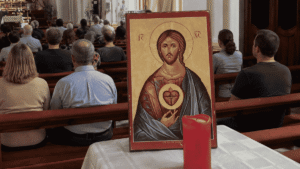
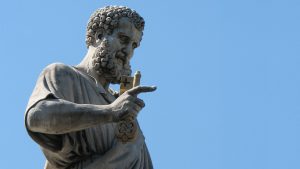
Francis was born into a noble family, but he renounced his wealth to found the Franciscan Order, emphasizing poverty, humility, and hands-on service. He was celebrated for his compassion toward animals and the natural world, and is an enduring symbol of peace, ecological stewardship, and compassionate faith. (Photo: Francis of Assisi, Ards Friary, Co Donegal).
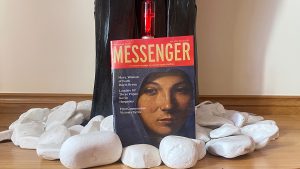
Fr John Cullen is a priest of the Diocese of Elphin, working in Hammersmith, London.He has written a two-part article on Francis for the Messenger, marking his anniversary. Part one was published in September and below is part two, our featured article of the month of November from the magazine.
St Francis of Assisi and El Greco
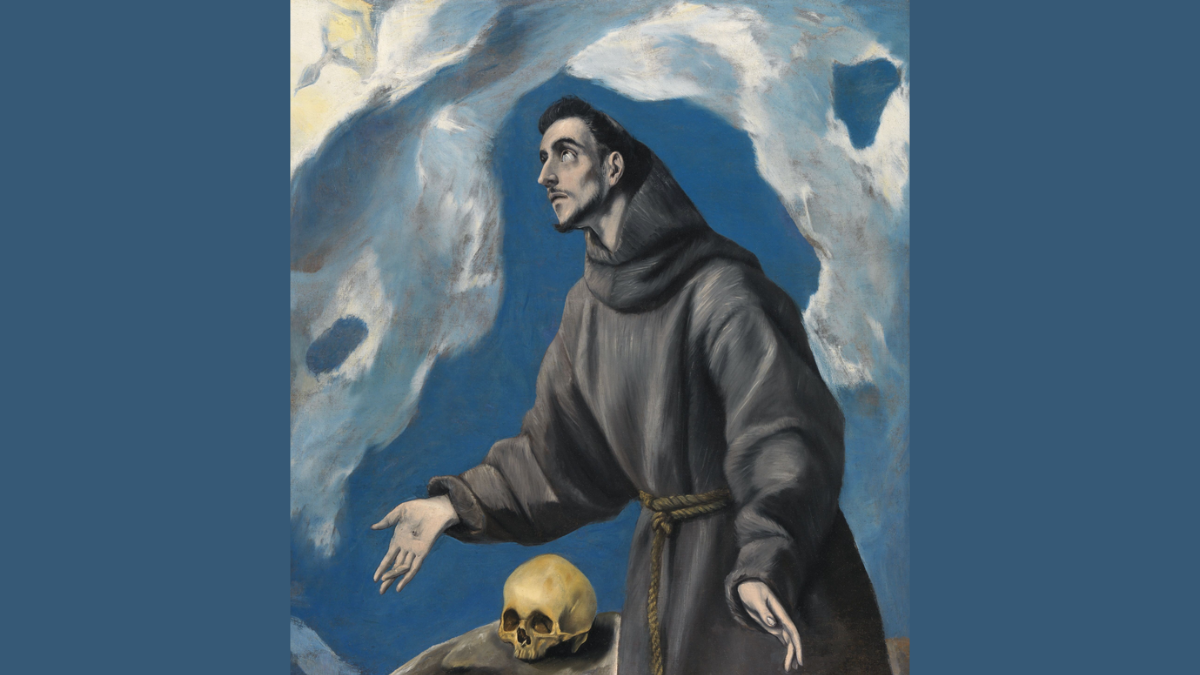
Domenikos Theotokópoulos, better known as El Greco, was one of the Counter-Reformation’s most prolific and inventive painters of St Francis. His painting of St Francis receiving the stigmata on Mount La Verna in 1224 can be viewed in Dublin’s National Gallery of Ireland. Thinly painted white clouds open up around Francis, silhouetting him against a rich azure sky; the jewel-like colour evokes the near-hallucinatory intensity of his mystical relationship with the divine.
El Greco, whose distinctive style drew both praise and criticism from contemporaries, portrayed Francis in various attitudes at critical moments of his life: ecstasy, meditation and stigmatisation. Numerous versions of each exist with varying levels of studio participation. The profound spirituality in El Greco’s expression of St Francis receiving the stigmata helps explain why he was once described as the greatest and most accurate painter of ‘il poverella’.
Toledo, where El Greco settled in the late 1570s after travelling through Italy to Spain from his native Crete, was a center for the veneration of Francis in the late sixteenth century. Ten Franciscan communities existed there when El Greco lived in the city, and Toledo’s status as a leading archdiocese made it a ready market for his portrayals. There are 135 surviving paintings by El Greco of St Francis.
Many of his works would have adorned family chapels, convents and monasteries, inspiring prayer and contemplation. The Counter-Reformation was a time of renewal in the Church; private prayer and spirituality were encouraged and pursued with particular fervour in Spain. Sixteenth-century writers, including Fray Luis de Granada and Ignatius of Loyola, published books championing meditation as a means of achieving communion with God.
In El Greco’s depiction of St Francis receiving the stigmata, the artist’s focus is to portray the saint’s inner experience of asceticism and solitude on Mount La Verna. The renewed Church emerging after the Reformation clarified and redefined doctrine, giving new impetus to visual artists. The Jesuits dedicated their Roman mother church, the Gesú, to St Francis of Assisi, and Ignatius of Loyola claimed that, while the Virgin Mary played a chief role in his conversion, he imitated and was inspired by St Francis. In this context ‘il poverella’ became the embodiment of Christian life and virtues.
An artistic revival of the miraculous experience of St Francis receiving the stigmata proved particularly popular. Artists experimented with the subject with iconographic zeal; ‘mystical’ portrayals that spectacularly emphasised Francis’s communion with Christ gained momentum. St Bonaventure—called ‘the prince of mystics’ by Pope Leo XIII—is associated with the Lives of Francis and The Soul’s Journey to God. He poetically titled the last chapter of his major work ‘On spiritual and mystical ecstasy,’ describing how through ecstasy our affection passes entirely to God.
Using Francis’s ecstatic contemplation at La Verna as a prime example, Bonaventure sought to recreate the saint’s experience in that place. He wrote of “absolute and unchangeable mysteries of theology… hidden in the superluminous darkness of a silence.” Earlier, Francis himself in his Prayer before the Crucifix asked “glorious God to enlighten the darkness of my heart.” Such theological metaphors of light and dark in the later sixteenth and seventeenth centuries stirred people toward prayer, meditation and contemplation. St Francis of Assisi and El Greco together show how both light and dark can lead us to God.
Why were artists, particularly El Greco, fascinated by St Francis of Assisi and his mystical experiences, Fr John Cullen ponders in November’s ‘Messenger’?