
‘Make your path as you walk’
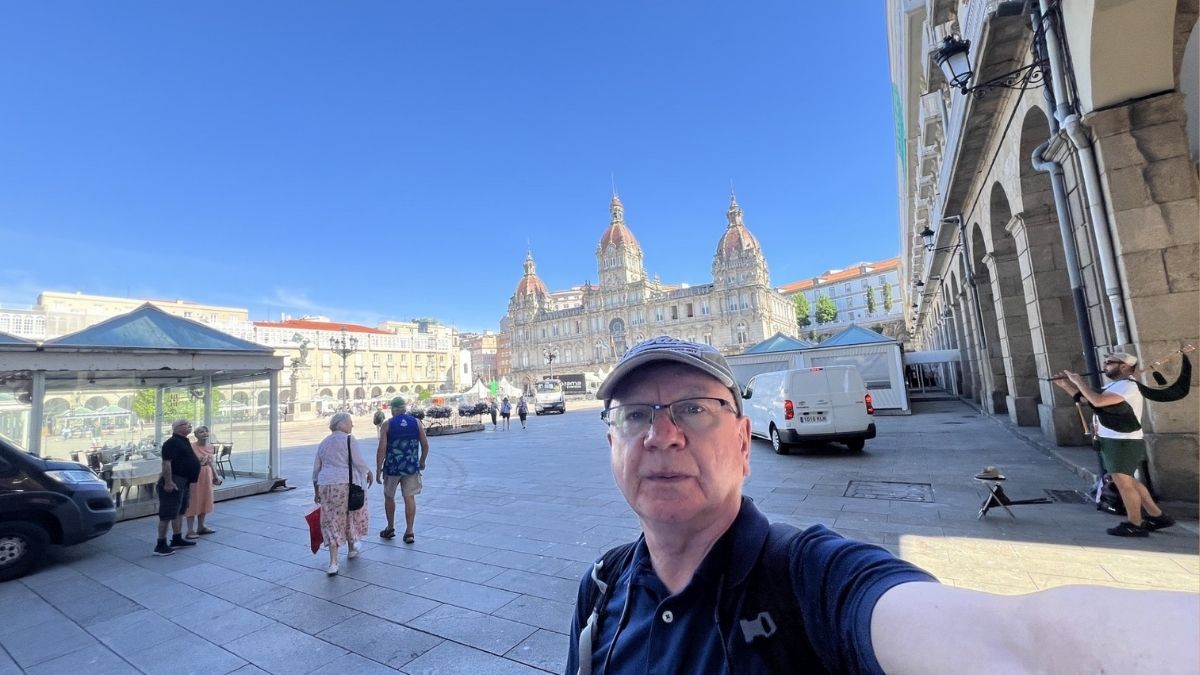
When Brendan McManus SJ got injured in a bike accident in Dublin this summer, his plans for walking the entire 800 km of the French Camino were abruptly ended. But through a tough process of discernment and learning once more to ‘let go’, he found God’s plan was wiser and better.
God Laughs at Our Plans: Finding Freedom in Injury
This year, 2026, I had a great plan to walk the entire French Camino (800km) in honour of my late mother, and indulging my love for the Camino and pilgrimage. I was training for months, and a highlight was a beautiful day in Glendalough where I had walked 18 km with a full pack and felt a million dollars. “I’m all set”, I thought, proud of my preparation and planning. Little did I know that the very next day all my careful laid plans were abruptly dashed in an accident with a Dublin Taxi. I have no memory of being knocked off my bike, rather I came to spreadeagled in the middle of the road. There was that terrible moment of silence and shocked coming-to, as I realised that something traumatic had happened.
Miraculously, I escaped serious injury and after several scans was released from hospital that same evening, limping out the door. There was a lot of soft tissue damage to my legs however, and a rotator cuff shoulder injury that only showed up a few weeks later. Initially, I thought I would still be able to do the Camino with some rest, but as the time wore on and the extent of the injuries kicked in, it became apparent to me that there would be no Camino this year and I was lucky to be able to walk at all. This was very disappointing, a plan that I had been working on for over a year and several months of training down the tubes. Instead, I was reduced to being an invalid, rest and painkillers being my companions. The temptation to despair, depression and feeling sorry for myself was just around the corner…
However, my Jesuit training and some recent recuperation experiences had taught me not to give up hope but to let go of the plans, pray and reflect on what other options were open to me; what else could God be inviting me to? I knew that I was still in recovery mode from the accident, in fact, it would take many months to recover and process what had happened. But apart from a daily physiotherapy routine, I could operate relatively normally. There was a Jesuit retreat taking place in the retreat house where I lived that I was unexpectedly able to participate in. That gave me the time and space to reflect on what had happened, process some of the grief around my mother’s death and examine what options I had to fill the space left by the Camino.
Gradually an idea came to me that I would go as a volunteer to Santiago, helping pilgrims debrief, as I had done in previous years. A few quick email exchanges established that the FCJ Camino Companions ministry would be happy to have me and were understanding about my need to rest and recover too. Another phone call to my Jesuit friends in Santiago resulted in them generously making a room available for me. In another stroke of good luck, the shoulder consultant cleared me for travel, giving me a cortisone injection to manage the pain (I was expecting surgery), and that same evening I was on the plane to Santiago. This was enormously consoling, rather than sitting at home moping, I would be of some use to pilgrims and would live the Camino vicariously through them.
My first week in Santiago was a bit of a reality check. I was still recovering from my minor injuries, doing my physio exercises, as well as working as a volunteer in the English Welcome (Camino Companions) in the Pilgrim Office). Inevitably, I overextended myself initially trying to do too much and quickly got exhausted. Again, my Jesuit training taught me to reflect and adapt; I had to reduce my working hours and get more rest. Then I was able to give myself to the Pilgrim Mass, preaching and some limited facilitation work. All the volunteers and the team leader were really supportive and helpful, it was good for me to be on the receiving end of that compassion. Similarly, I had to learn how to ask for help, to know when to rest and to know the limits of my energies.
Because I wasn’t expecting to be there, everything was a bonus and I was grateful for every single thing; being alive for starters. I was very conscious of the Ignatian insight around resetting expectations, and how I had to completely let go of the Camino plan in order to appreciate this experience fully. There were several unexpected surprises for me: I got to catch up with my old Jesuit friend Fernando, who had arranged the accommodation for me.
I got to go to the coast for a break when I got too tired which was very restorative. The local council swimming pool became a haven for me, an escape from the heat and the intensity of work, it was also good for my shoulder injury and for my head. I met lots of pilgrims and old friends along the way, I was able to welcome some Dublin pilgrims into Santiago. I connected with the Irish community in Santiago and was present at a few very enjoyable music evenings. I became very friendly with the owners of the café where I had my morning coffee, where I would prepare my homily, and they were very good to me, including hosting my final evening there.
The whole experience, though testing, was deeply consoling in the Ignatian sense. I had a strong sense that I had made a good decision in going to Santiago, it was good for me, and I got to contribute to pilgrims’ Camino experience, a ministry that I love. It was a good place to recover, to do some work but also get a lot of rest (the importance of balance), As always it was inspiring to hear pilgrims’ stories and to facilitate their reflections, to ‘break bread’ and celebrate liturgically their ‘walking with Christ’.
I learned a lot about ‘letting God operate within me’, about not overcommitting myself and how God works paradoxically through injury and incompleteness. I had a strong sense of being a ‘broken vessel’ or a ‘wounded healer’; one of the most heartfelt homilies » I gave was about God working powerfully through suffering (the Cross), and new life and possibilities opening up if we could stay faithful. I felt the whole thing as a huge privilege, and I went home with a full heart. It felt like a new chapter in my pilgrimage of life.
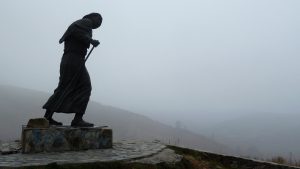
“Caminante, no hay camino, se hace camino al andar.
Traveler, there is no road; you make your own path as you walk.”
Antonio Machado
A simple discernment process:
- Pray with the reality of the situation; God is there somewhere, in the ‘real’ not the ‘ideal’
- Identify what is the unhelpful expectation that you need to let go of
- Pray for the inner freedom to be released from this; acknowledge the pain/death of a dream
- Examine your options, what other paths are open to you
- Put your plans into action but reflect and refine as you go
- Be grateful for small things and try to live in gratitude (consolation)
Huge thanks to the Sr. Katherine and the FCJ Sisters, the amazing team of Camino Companions, the Jesuit Community in Santiago including Fernando, Dani and Fermin, The La Coruña Jesuit Community, the medical professionals in Dublin, Brian Hillery and all those who supported me on my recuperation ‘pilgrimage’.
Brendan McManus SJ
June 2026