
Finding God’s Will in a Group
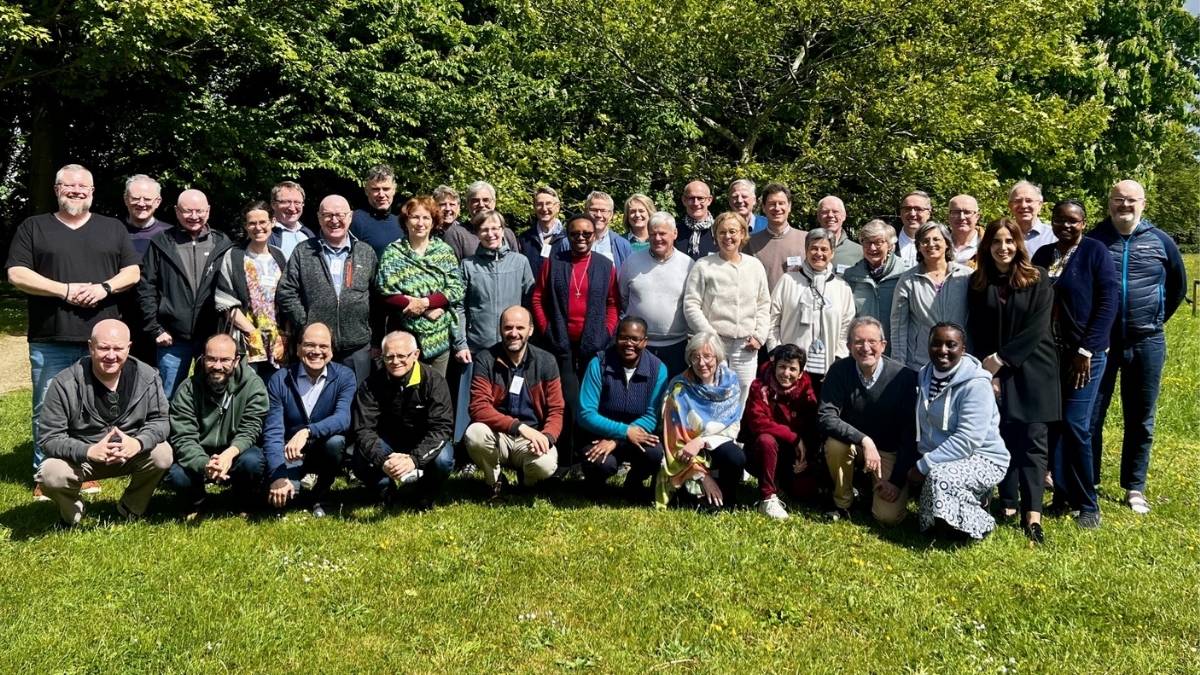
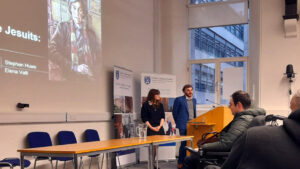
DICAP », Leadership, Discernment in Common, and Apostolic Planning held a workshop in Dublin, Ireland, as a practical experience of being guided through the processes of personal and communal discernment and apostolic planning so as to be able to form others in the future.
Leadership, Discernment in Common, and Apostolic Planning are being reaffirmed by the Jesuit Order as crucial means of finding better ways to serve the Society of Jesus’ mission. Forming Jesuits and lay collaborators alike to use these tools well has become a key challenge at all levels.
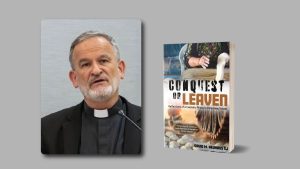
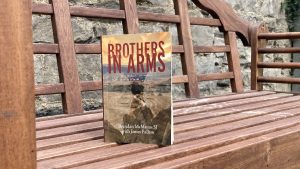
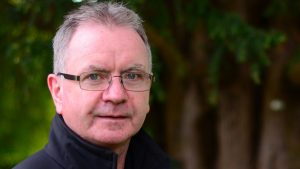
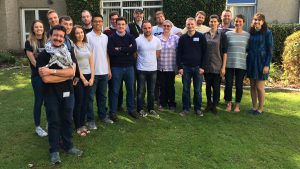
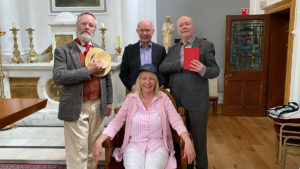
The training took place in the Manresa Jesuit Centre for Spirituality in Clontarf, Thursday 7 -15 May 2026, with participants invited from different Ignatian ministries around the world. The President of DICAP, Father Dalibor Renić, SJ, was part of the group, as were the Irish Province Socius Terry Howard, SJ, and Brendan McManus, SJ. The course has an excellent reputation, with significant demand for places and a long waiting list. Find out why in this report below from Brendan McManus SJ.
Complexity, not Certainty, and No Easy Answers
It shouldn’t have worked at all: getting a group of 36 people from 15 countries and diverse backgrounds and ministries to come together for 7 days and find common ground was quite a feat. Outside in the world divisive narratives, political machinations and lack of dialogue prevailed, communal discernment and making group decisions seemed like an impossible dream. Until this workshop, that is….
The Ignatian tradition was central here in offering another way to interact as a group. It was broad enough to encompass different spiritual traditions and backgrounds, that is, ecumenical in character. The method was a genuinely spiritual process of ‘listening together’ for the movement of the Holy Spirit. The workshop was based on the ESDAC » method of communal discernment and developed into this practical framework for decision-making and planning that is DICAP ». It is firmly rooted in the wisdom of St Ignatius Loyola, with references to the Spiritual Exercises everywhere, and adapted for contemporary groups seeking to discern God’s will together.
At its heart, communal discernment begins with an insight from the Spiritual Exercises: God is already at work in each individual and therefore in the group itself (St Paul’s concept of the ‘body of Christ’). I’ve been guilty myself of focusing on individual discernment almost exclusively, missing out on the gift that it is group work, not to mention the greater impact and enhanced decision-making capacity. It has a world changing insight at its core: groups can find a way through conflict to consensus. The invitation is not to see decision making as authoritarian or directive, as is too often the case, but to trust in the gentle action of grace. This changes the dynamic completely. The emphasis moves from imposing one’s will or winning arguments to attentive listening; from anxious posturing to trust; from rigid control to openness to the Spirit.
The ESDAC process with its three rounds of group sharing creates a safe, structured space where people can speak honestly, pray together, and identify the Ignatian ‘movements’ within themselves and within the group. It differentiates the ‘still, small voice’ of the Holy Spirit that speaks through consolation: peace, openness, vitality, or a growing sense of coherence (the movement towards God; the right direction). Equally, desolation shows up as agitation, unease, or heaviness, normally indicating a wrong direction (counter movement). The discernment process and what plays out in the group a growing sense of a consensus and an invitation to spiritual freedom, the letting go of individual agendas.
We were introduced to the ESDAC » method of Ignatian communal discernment structured around three questions “Who? What? How?”. These can be summarised in order of importance as first a focus on identity (“Who?”), then objectives (“What?”), before finally arriving at the practical implementation (“How?”). It is always tempting for groups to start with the practical ‘How’ but the other levels often need attention first and are harder but more worthwhile work.
- We need to ask who the community is becoming before God (i.e. grace, charism, purpose) through dialogue and clarifying questions around identity;
- Then the ‘what’ comes into play, strategic or apostolic ‘calls (take the Jesuit UAPs » for example, which offer orientations or priorities)’, this is effectively a vision of where we want to go;
- Finally the ‘how’ in terms of concrete action or mission that God may be calling the group toward, that is: structures, programs and resources.
This process ensures that discerned decisions emerge not merely from expediency or efficiency, but from a shared spiritual focus that seeks coherence, Ignatian freedom, and a genuinely Spirit-led apostolic mission.
A key feature of the process was the Ignatian method of deep listening, based on spiritual conversation ». Participants were invited to listen not only to the words being spoken, but also to what stirred within them as others spoke. Ignatius believed that God communicates through our deepest desires and affective movements. In communal discernment, this became a shared spiritual practice. Typically, the breakthrough came not through the loudest voice, but through the quiet emergence of a common ‘echo’. Silence was crucial, both in our personal prayer and in group spaces. Often, silence can feel awkward or unproductive, but here it was a way of remaining connected to the source and creating sacred space. Silence allowed reactions to settle, the ego to loosen its grip, and deeper wisdom to surface. We discovered that clarity emerged gradually, largely organically, when enough room was given for reflection and prayer. It does take huge chunks of time and energy.
The ESDAC approach also celebrates difference and helps move from the ego to humility. What we witnessed was that each person had something to offer and the method allowed all voices to be heard equally. Rather than one person dominating and dictating, communal discernment worked through the three rounds of sharing that used listening and cooperation to create mutual trust and vulnerability. This took a lot of effort, and we had to learn to be open to the Spirit working in another, even when they were from a very different cultural background. Communal discernment asks each person to go on a journey with the others towards the greater love, a deeper freedom, and a hard won but fruitful dialogue on incarnate ways of building the Kingdom.
We discovered that group discernment does not guarantee an easy answer. Rather, the process is a container for the ‘death-resurrection cycle’ that goes deep, surfacing fears and doubts (a downward movement), and building consensus (an upward movement) with the Spirit’s help. Often, the process revealed complexity rather than certainty. There was one clear moment when the group experienced a profound shift: we had run aground trying to force an artificially agreed shared mission. There was huge learning in the common experience of desolation, unease and too-hard struggle, and the subsequent return of consolation, light and freedom, in letting go of this forced ideal. There was a palpable sense of group ‘movements of the Spirit’, getting a feel for how genuine discernment works experientially and how we can read what is going on within ourselves and the group.
One of the most memorable group exercises was called the Museum of Shadows, a powerful experience of reconciliation of communal sin. We began with a prayer sheet, then personal prayer and finally small group sharing on what paralyses us and prevents us as a church from moving forward. Meals were taken in silence that day. Then each small group was invited to name a sin, a common paralysis, and to represent it as a group statue. There were no words spoken, just a word written large at the foot of the statue to name the particular paralysis. Some themes were: closed hearts, self-centredness, washing our hands, and miscommunication. When the statues were ready, the other half of the groups contemplated this ‘museum of shadows’. We walked silently between the statues, observing the ‘frozen’ bodies, hands, faces, in order to feel what the statues-people were feeling in their paralysis. It was hard to communicate just how powerful this was, a visceral embodiment of sin and its paralysing effects, inviting repentance and renewal.
In Manresa, Spain, Ignatius experienced profound spiritual development, including the integrating illumination by the River Cardoner, which was central for seeing God active in all things. Similarly, Ignatian communal discernment is points to a ‘group’ spirituality, a way of finding God’s will together. It is a way of proceeding communally, just like the early companions of Ignatius in 1539; being prayerful, attentive, respectful, and constructive. It is a dramatic counter witness to a divided, fear-filled world, and constitutes a real personal and communal transformation. This is what we experienced together during those precious days in Manresa, Dublin.
Brendan McManus SJ
Reflection on DICAP, Dublin,